
Masseria Secolario
Salvatore Toma: Salento Poetry Enters the Masseria
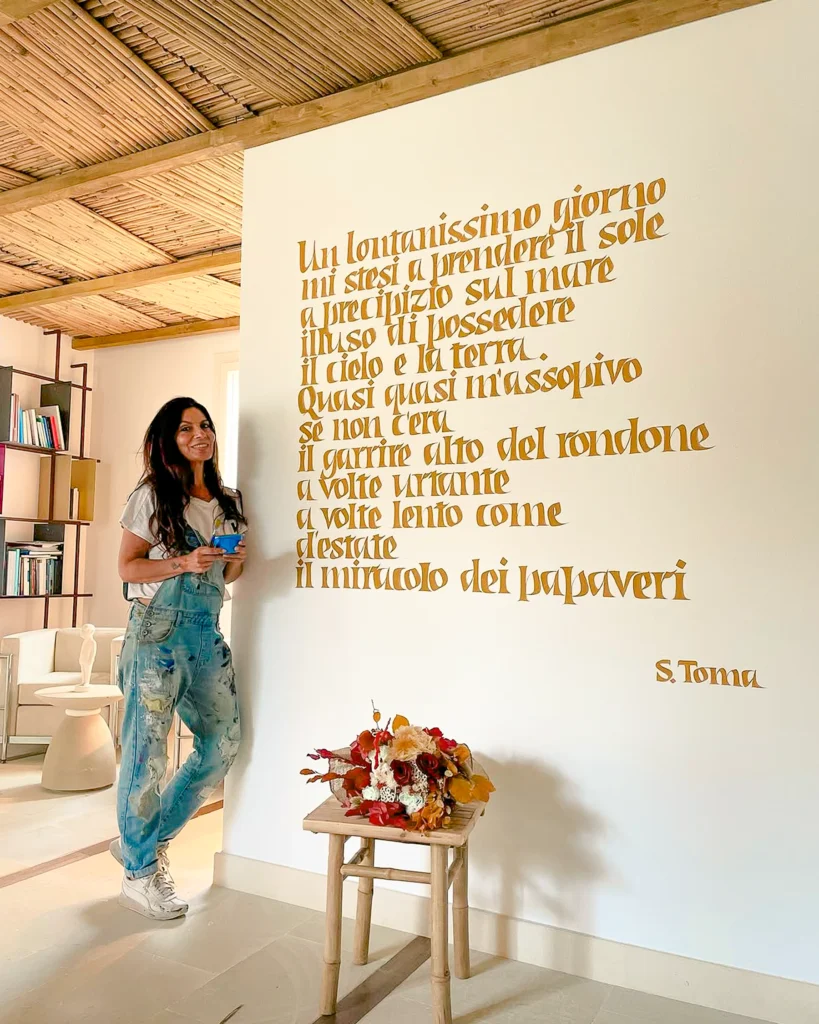
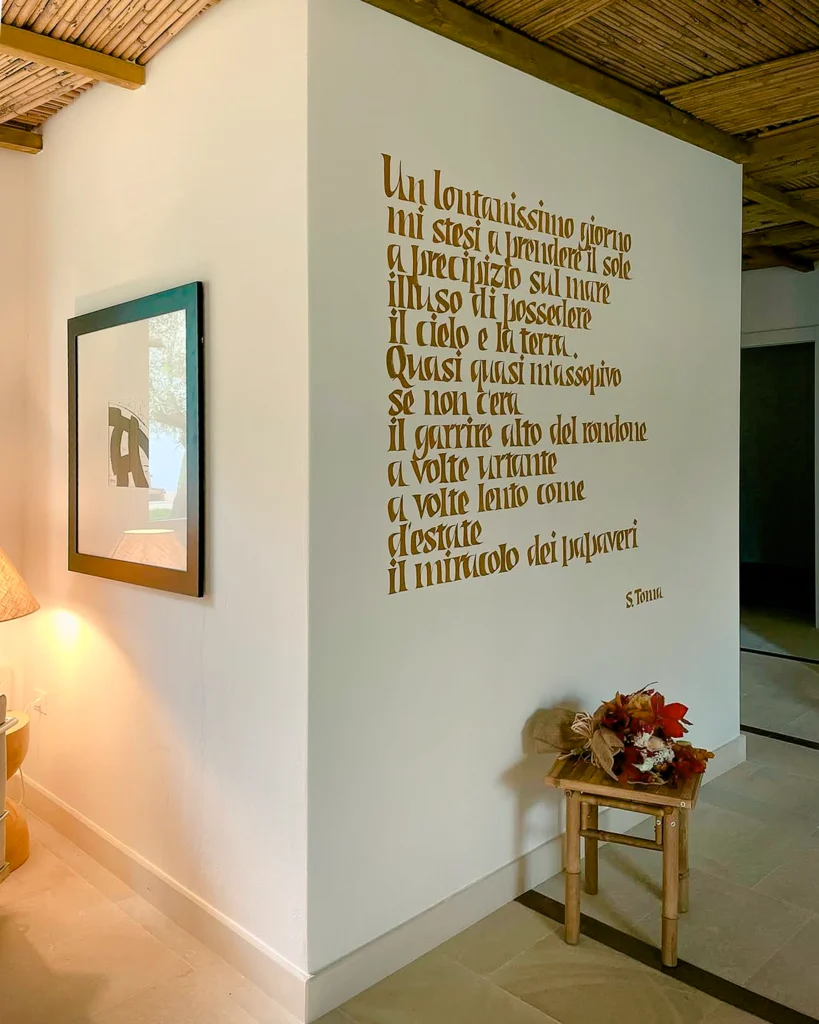
Per Masseria Secolario, Marta Lagna realizza un intervento di arte calligrafica parietale che porta all’interno dello spazio una delle voci più intense della poesia salentina: SalvFor Masseria Secolario, Marta Lagna creates a site-specific calligraphic intervention that brings one of the most intense voices of Salento poetry into the interior of the space: Salvatore Toma.
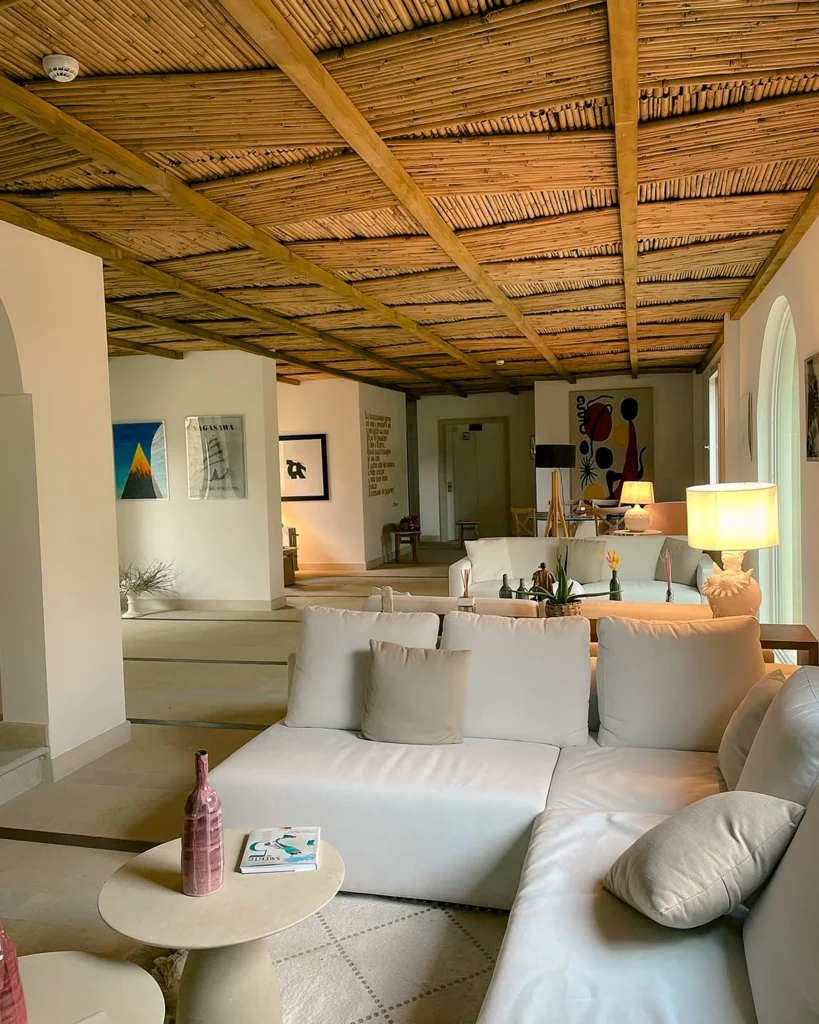
The wall becomes a writing surface, allowing the poem to enter into dialogue with the rural architecture of the masseria, among reed ceilings, wooden beams and natural materials. The chosen text evokes the sea, the sky, swallows and poppies, creating a suspended atmosphere that resonates with the character of the place.
This is not simply decoration, but a site-specific intervention in which literature, calligraphy and architecture meet to evoke a distinctly Salento sense of place and memory.
Salvatore Toma’s Poetry on the Wall
At the centre of the intervention are the words of Salvatore Toma, one of the most intense and distinctive Salento poets of the second half of the twentieth century.
The poem describes an apparently simple moment: a man lying in the sun by the sea, immersed in the almost illusory feeling of possessing the sky and the earth. The landscape then interrupts this suspension through the flight and call of a swallow, leading to the final image of poppies.
It is precisely this relationship between nature, light and the perception of time that makes the text particularly suited to the atmosphere of the masseria.
The poem is not simply displayed.
It is written directly onto the architecture.
A Wall Becomes a Page
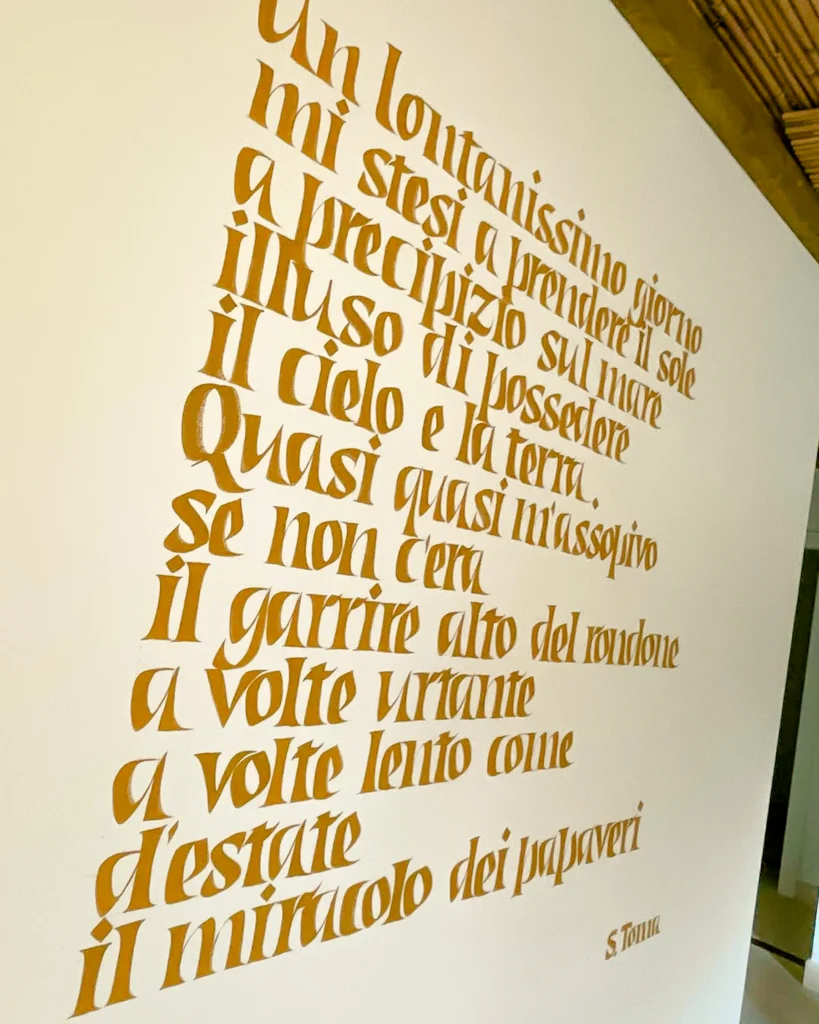
The calligraphic composition covers the wall, transforming it into a large literary surface.
Marta Lagna uses a contemporary uncial and Gothic-inspired script, characterised by compact, geometric and strongly structured letters. The characters move close together, interlocking to create an almost tactile composition: rather than a sequence of words, the writing appears as a solid visual block.
Calligraphy therefore maintains a dual nature.
On one level, it remains legible and invites reading; on another, it functions as an architectural element in its own right.
Words become surface.
Surface becomes space.
Ochre and Gold: The Colours of the Land
The colour palette reinforces the relationship between the artwork and the architecture of the masseria.
Warm ochre yellow dominates the composition, bringing an earthy, luminous tone that dialogues with the natural materials of the interior and with the light of Salento.
A subtle touch of gold appears within the lettering, adding depth and reflection without altering the strength of the composition.
Ochre and gold evoke earth, sunlight, stone and the rural character of the Apulian landscape. The calligraphy therefore does not feel like an element imposed upon the room, but rather a presence that belongs to its architecture.
A Landscape Written in Words
Toma’s text brings an entire landscape into the room.
The sea, the sky, the swallow and the poppies are not simply poetic images. They become elements through which the space itself can be experienced differently.
Guests encounter a poem that asks for time. The monumental scale of the lettering slows the eye, while the density of the composition invites the viewer to move closer, read and return to the words.
It is a different experience from viewing an artwork from a distance.
Here, poetry becomes part of the experience of staying.
Nature as an Experience of Time
In Toma’s verses, nature is not a backdrop, but a condition of experience.
Sun, sea and the flight of the swallow create a moment of suspension, while the reference to poppies introduces a seasonal and fragile dimension deeply rooted in the Mediterranean landscape.
That same sense of slowness finds a natural counterpart in the masseria.
A place where architecture, materials and landscape invite a less hurried relationship with time.
Calligraphy makes this relationship visible: a poem rooted in the territory enters the space and changes the way it is perceived.
Salento’s Memory Enters the Architecture
The project also emerges from a desire to bring a literary voice deeply connected to this land into the present.
Choosing Salvatore Toma means introducing into the masseria not a generic image of Salento, but a precise cultural memory.
Poetry becomes part of the experience of the place, alongside stone, wood, reed and light.
Marta Lagna creates an intervention in which memory is not presented as something belonging to the past, but reactivated through writing.
The wall becomes a meeting point between a poet, a territory and those who enter the space today.
Poetry as a Gesture of Wellbeing
In this project, wellbeing is not expressed through a conventional image of relaxation.
It emerges instead from the possibility of slowing down.
Reading a poem, recognising a landscape, rediscovering a familiar image or encountering a new one: these are simple gestures capable of changing the rhythm of an experience.
Toma’s verses introduce precisely this possibility into the masseria.
Space to slow down.
Poetry to read.
A landscape to rediscover.
PROJECT SUMMARY
PROJECT
poesia di Salvatore Toma
CLIENT / BRAND
Masseria Secolario
INTERVENTION
Artistic Calligraphy · Wall Lettering · Site-Specific Art · Interior Art
YEAR
2024
LOCATION
Masseria Secolario · Salento, Italy
CONCEPT
A site-specific calligraphic intervention that brings Salvatore Toma’s poetry onto the wall of one of the masseria’s rooms. Executed in warm ochre yellow with touches of gold and inspired by a contemporary uncial and Gothic language, the lettering enters into dialogue with the rural architecture, natural materials and landscape of Salento, transforming poetry into a physical and spatial presence.